I'll explain everything
Why a movement is programmed, why the weight is what it is, why the rest is that long. The reasoning is part of the session.

I coach one person at a time. Beginners learning the foundations, athletes correcting patterns, and the people in between. Read the four ways in below, then tell me which one sounds like you.
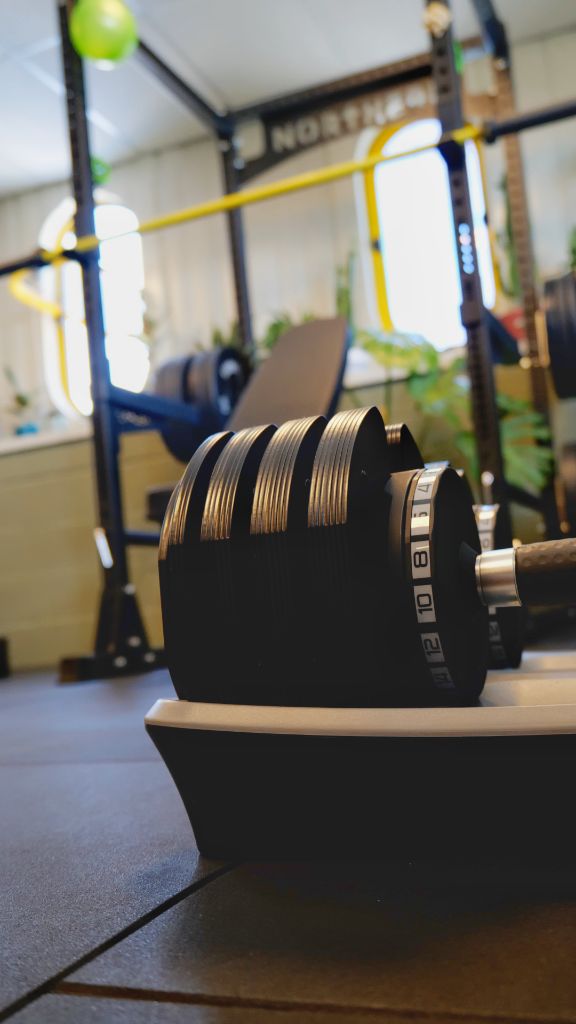
For a complete beginner, the first weeks are foundations. How to load a joint, how to breathe under tension, why a hinge is a hinge and not a squat. You leave each session knowing not just what you did but why.
For an experienced athlete, the work goes the other way. Nuance, sport-specific patterns, correcting the compensations you've built without noticing. Competition prep and off-season blocks are programmed as one continuous conversation.
Read the full 1:1 approach →This is not a class. There is no shared workout on a whiteboard, no shouting from the front. Six people train in the same room, each following their own programme, each getting the same coach's eye they'd get in a 1:1, just less of it.
It suits people who train better with company, and people who want regular coaching without the full 1:1 commitment. If a movement isn't in your plan, we don't do it because someone else is.
There are two kinds. A full assessment looks at everything. Hips, spine, shoulders, ankles, breath, patterns under load. It produces the map you'll train from for the next six months. A symptomatic assessment is narrower. A knee that hurts on stairs, a shoulder that clicks overhead, a lift that stalls.
Even complete beginners benefit. It removes all guesswork before you start. The plan you receive is built on what your body actually does, not what a template assumes.
For people who train alone but don't want to guess. Twelve weeks of programming. Progressions, regressions, check-in points, and the reasoning behind each exercise so you know what to keep and what to skip when life gets in the way.
It suits travellers, self-motivated trainers, and people whose schedules make regular sessions impossible. It doesn't suit anyone still learning the base movements. For that, spend a block in 1:1 first.
Why a movement is programmed, why the weight is what it is, why the rest is that long. The reasoning is part of the session.
Not a template with your name on it. Built for the body in front of me.
Progress is progress. Rushing is not one of the tools I use.
Old, new, suspected. Bring them in. They change the plan, they don't stop it.
If a cue doesn't apply to you, I won't give it. If a rule has an exception in your case, we work in the exception.
Starting from scratch is not a lesser place to start. It's simply where the programme begins.
A short call. Fifteen minutes, no pressure. We'll work out which of the four is the right way in. If none of them are, I'll say so.
Fifteen minutes, no pressure. Fill in a few details and I'll be in touch to arrange a time.